stra·te·gic
har·mo·ny
a state where an organization delivers more output with less friction and people are aligned to work that energizes and fulfills them
Most organizations have the strategy. Few have the harmony.
We build the difference.
We solve problems across many domains.
A high-performing SVP just received a poor review for the first time in her career. Her skip-level reviews are glowing. Her direct reports describe the team as "directionless." Nobody can explain the gap.
A COO pushed through a new operating model in 90 days. The org charts changed. The actual behavior didn't. She's now on her fourth all-hands trying to explain why this matters.
The product and engineering leads have clashed on every initiative for two years. Both are exceptional performers. HR has run three team-building sessions. Nothing has changed.
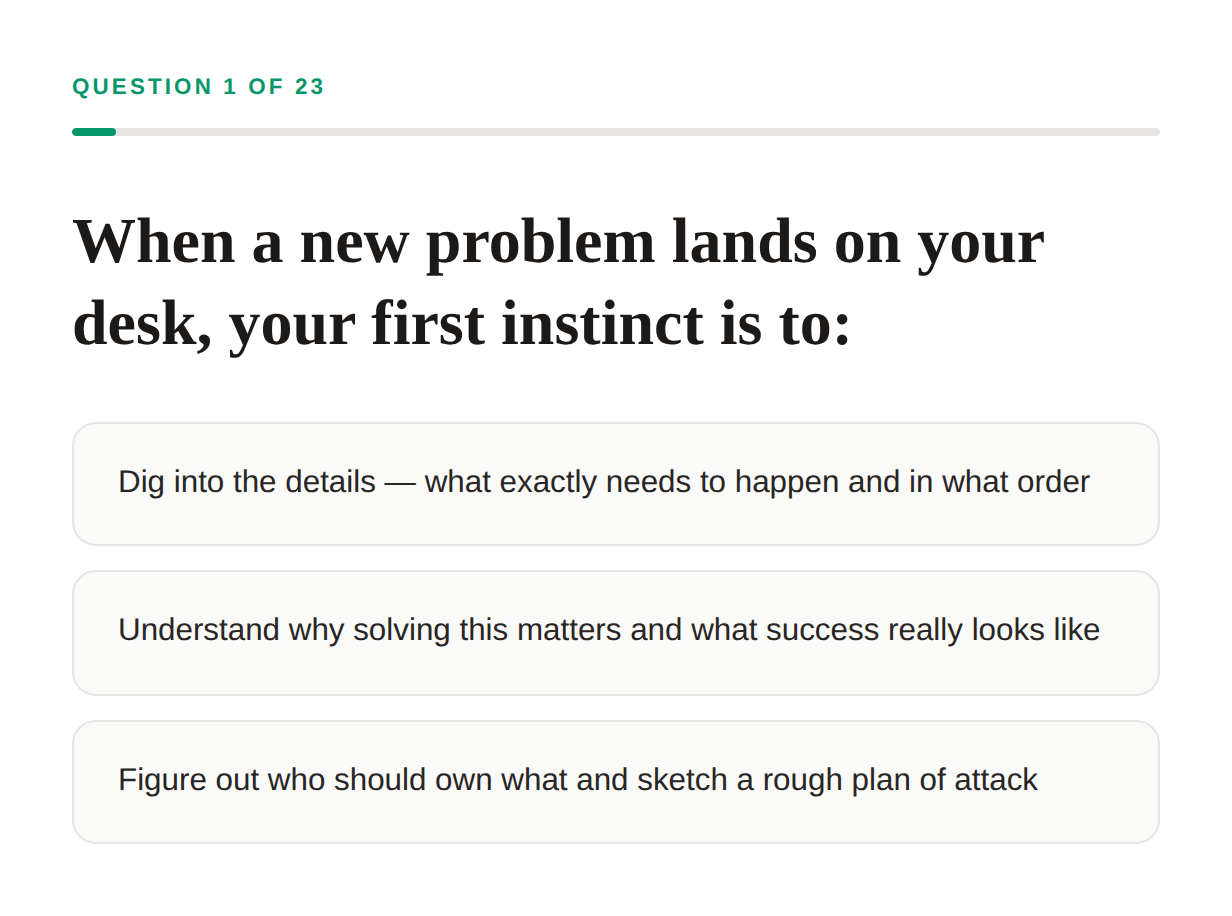
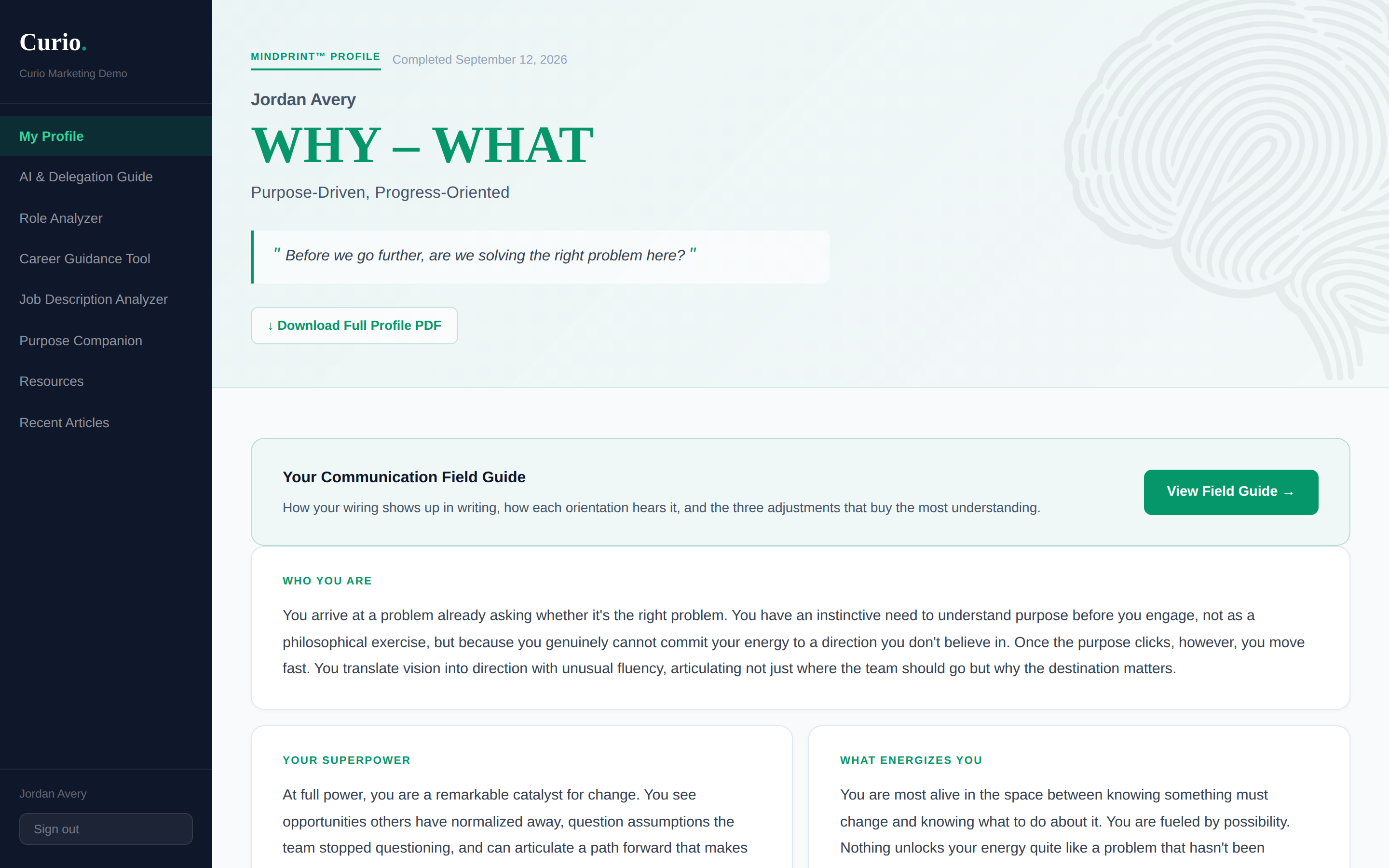
Achieving strategic harmony on a team starts with understanding how each member is wired to solve problems — their MindPrint™.
Everyone draws on three cognitive orientations when tackling complex challenges: WHY (purpose), WHAT (progress), and HOW (precision). Each person has a natural hierarchy among the three. Their primary orientation is where they thrive, it energizes them. Their secondary is functional and comfortable. Their tertiary is where thinking becomes a drain.
Strategic harmony happens when people are aligned to work that plays to their primary and secondary, and shielded, where possible, from sustained work in their tertiary.
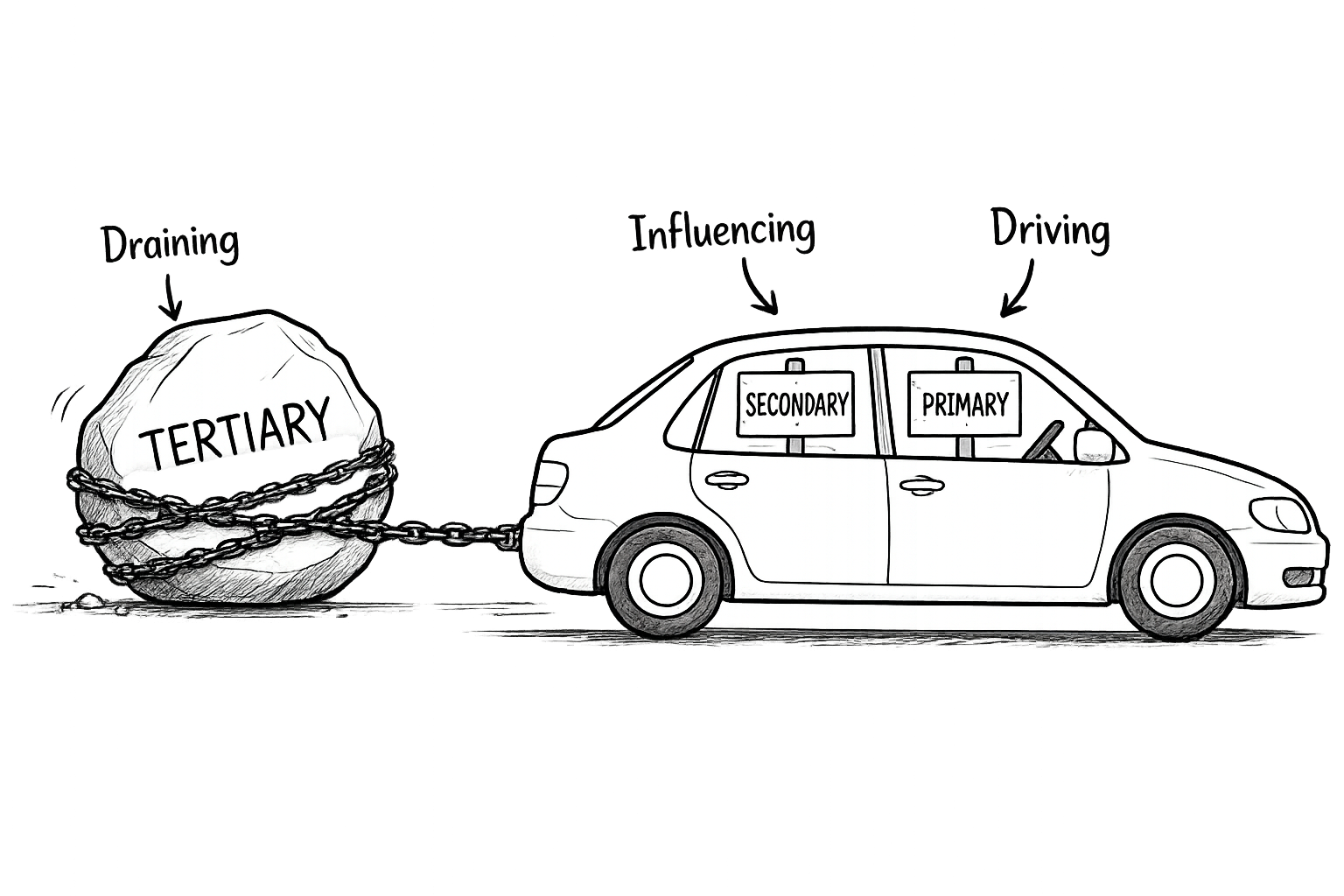
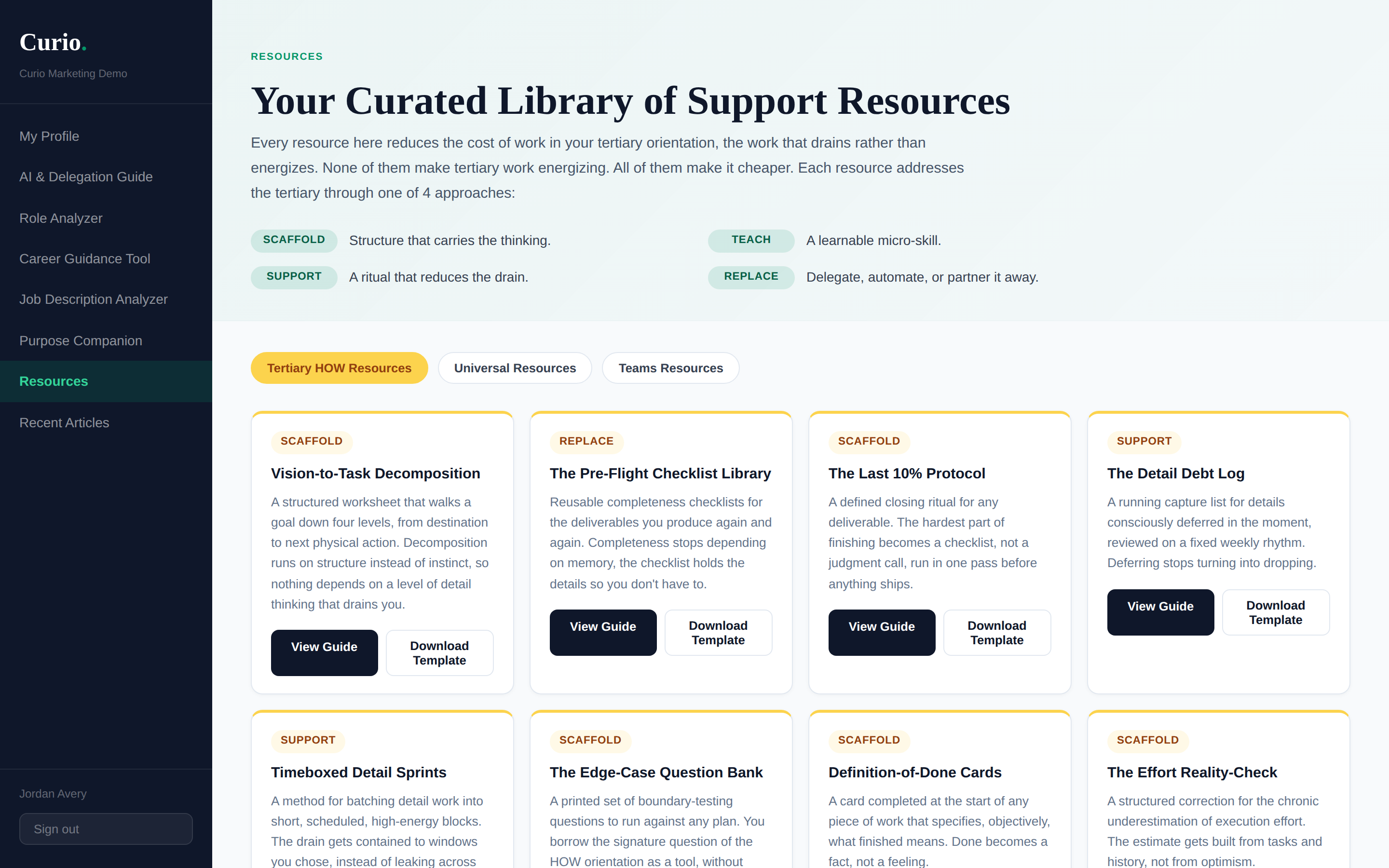
Some draining work can't be delegated. Contain it instead: a timer, a defined finish line, a reward after. Detail work costs you less in short, bounded bursts than spread across a week.
Where we can help.
There are opportunities wherever cognitive misalignment creates friction. Following are some common opportunities we see — each with a distinct set of challenges we work with you to optimize.
How we work with you.
We work with leadership teams to map cognitive orientations, redesign how work is assigned, and build the conditions where every person operates from their primary — generating the energy that drives exceptional output.
Before we can help your team evolve, we need to understand it deeply. We gather rich data about how each person naturally approaches problems and how your team's work is currently structured.
- Individual MindPrint™ assessment for each team member
- Leadership consultation on team dynamics and work types
- Identification of energy patterns and misalignments
- Analysis of the problem types your team regularly faces
We bring the team together in a transformative workshop that gives everyone a shared framework for understanding how they — and their colleagues — think. What was invisible becomes visible and actionable.
- Immersive team workshop
- Problem-solving theory and typology
- The six thinking profiles revealed
- The Energy Model — understanding your team's fuel
- Strategies for working across thinking styles
- Team purpose and optimization planning
We work closely with leadership to translate insights into actionable strategy — customized specifically to your team's composition and the challenges you face.
- Customized recommendations report for your team
- Focused leadership strategy sessions
- Organizational structure recommendations
- Meeting and communication strategy
- Working strategies for key thinking-style combinations
- Reporting and collaboration structure guidance
Ready to unlock your
team's full potential?
Let's start with a conversation about your team, your challenges, and how Curio can transform the way you work.